As a support worker at Home Support North, you are a master of many skills. From expert manual handling to precise medication reminders and thorough personal care, your practical abilities are essential. But there’s another set of skills, often less tangible, that truly elevates your role from good to extraordinary: empathy and communication.
These “soft skills” are the heart of person-centred care. They’re about connecting with your clients on a human level, understanding their world, and building relationships based on trust and respect. After all, you’re not just completing tasks; you’re often the most consistent social connection for many individuals in their own homes.
The Essence of Empathy: Walking in Their Shoes
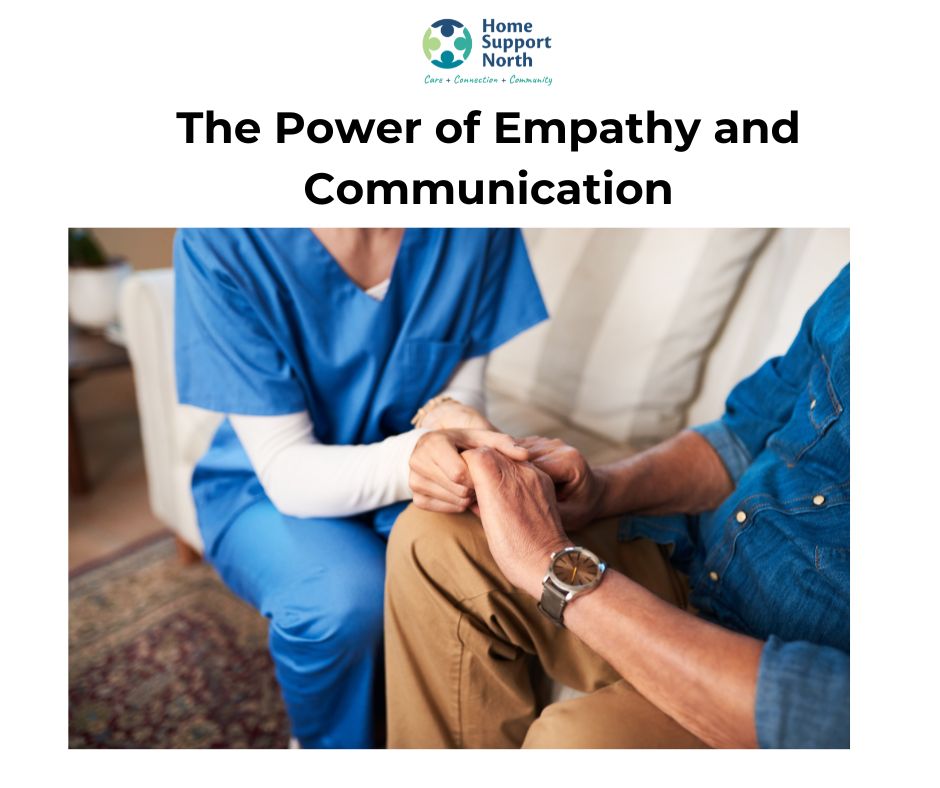
Empathy is more than just sympathy; it’s the ability to understand and share the feelings of another. For a support worker, this means:
- Imagining their perspective: What might it feel like to need assistance with daily tasks? To experience pain, loneliness, or frustration?
- Validating their feelings: Even if you can’t fix a situation, acknowledging a client’s emotions (“I can see this is really frustrating for you”) can make a huge difference.
- Seeing the person, not just the condition: Remembering that behind every diagnosis or need is a unique individual with a lifetime of experiences, preferences, and dignity.
Empathy guides your actions, helping you anticipate needs, respond sensitively to changes, and provide care that truly respects their individuality.
The Art of Communication: More Than Just Talking
Effective communication is a two-way street, involving both speaking clearly and, perhaps even more importantly, active listening.
Active Listening: Hear What’s Not Said
- Give Your Full Attention: Put away distractions. Make eye contact (if appropriate and comfortable for the client).
- Listen to Understand, Not Just to Reply: Focus on their words, tone, and body language. Are they feeling anxious? Lonely? Frustrated?
- Use Open-Ended Questions: Instead of “Are you okay?”, try “How are you feeling today?” or “What’s on your mind?” This encourages them to share more.
- Reflect and Clarify: Repeat back what you think you heard to ensure understanding. “So, if I understand correctly, you’d prefer to have your tea after your shower today?”
Speaking Clearly and Respectfully
- Clear and Calm Voice: Speak slowly and clearly, especially if your client has hearing impairments or cognitive decline.
- Simple Language: Avoid jargon or overly complex sentences.
- Adapt to Their Needs: If a client has dementia, short, direct sentences work best. If they have hearing loss, ensure you’re facing them and speaking at an appropriate volume.
- Non-Verbal Cues: Your body language speaks volumes. A warm smile and an open posture convey warmth and approachability.
- Be Patient: Allow ample time for clients to process information and respond. Don’t rush them.
Building Rapport and Trust
When you combine empathy with effective communication, you naturally build strong rapport and trust. Your clients feel heard, respected, and understood. This trust is invaluable – it makes their care experience more positive, and it can even make your job easier, as clients are more likely to cooperate and communicate their needs openly.
Navigating Challenging Conversations
Sometimes, you might encounter sensitive topics or difficult emotions. In these moments, your empathy and communication skills are crucial:
- Stay Calm and Patient: Respond gently, even if the client is agitated or distressed.
- Acknowledge Their Feelings: “I can see you’re feeling upset right now.”
- Maintain Professional Boundaries: While empathetic, remember your role and refer serious concerns (e.g., safeguarding issues, severe emotional distress) to your supervisor. You don’t have to carry the burden alone.
Your Role as a Human Connection
Beyond the tasks, you are often a vital source of companionship and human connection for your clients. Your ability to connect, to truly see and hear them, enriches their lives and makes your role deeply meaningful. These “soft skills” aren’t secondary; they are fundamental to providing the compassionate, high-quality care that is the hallmark of Home Support North.
Keep practicing, keep listening, and keep caring. You truly are making a difference, one empathetic conversation at a time.