If you live in Northland, you know that independence isn’t just a preference—it’s part of our DNA. But for a long time, the New Zealand health system didn’t reflect that.
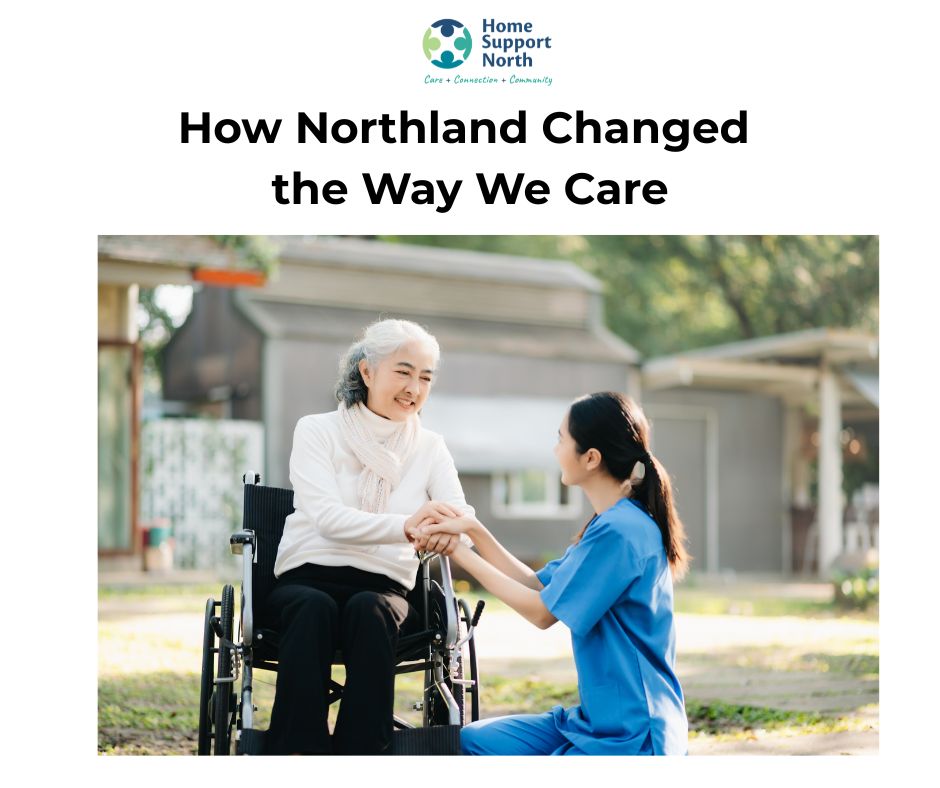
For much of the 20th century, if you needed help with daily tasks, the “solution” was almost always institutional. You moved out of your home and into a facility. Today, that has flipped. The government now actively prioritizes “Ageing in Place.” Here is the story of how home support became the gold standard in Te Tai Tokerau and why it’s the model the government now banks on.
From “Benevolent Institutions” to Modern Homes
In the early 1900s, care for the elderly was often bleak. If family couldn’t help, people ended up in “charitable institutions” that were often strictly regulated and clinical. After WWII, we saw the rise of the modern rest home, but by the 1970s, New Zealand had one of the highest rates of residential care in the Western world.+2
Then, in the 1980s and 90s, something changed. Seniors and their families began to speak up. They didn’t want to be “processed”—they wanted to stay in their own communities, near their own gardens, and on their own terms.+1
1994: A Northland Milestone
Home Support North was born into this era of change. Since 1994, we have been 100% Northland owned and operated. We started because local people realized that Whangārei, Kerikeri, and Kaitaia needed a service that understood the geography and the spirit of the North.
We weren’t just “cleaning houses”; we were part of a national movement to prove that with the right support, people could stay safe and happy at home for much longer than previously thought.
Why the Government Prefers Home Support
It’s no secret that our population is ageing rapidly. By the late 2030s, one in four New Zealanders will be over 65. To meet this challenge, the government (through Health NZ and the “Better Later Life” strategy) has moved its funding focus heavily toward home support.
Here is why they like it:
- Better Health Outcomes: Statistics consistently show that people stay mentally sharper and physically more active when they remain in a familiar environment.
- The “Restorative” Model: In 2026, the goal isn’t just to “do things for you.” It’s a “restorative” approach—helping you maintain your own strength so you can keep doing things for yourself.
- Cost-Efficiency: It is far more sustainable for the taxpayer to fund a few hours of high-quality home support than it is to fund a permanent rest home bed.
The “Northland Way”
In Northland, “Ageing in Place” has a deeper meaning. It’s about Manaakitanga. It’s about recognizing that a person’s home is their sanctuary and their connection to their whānau and history.
Whether we are visiting a farmhouse in the Kaipara or a unit in Whangārei, we know we are participating in a system that was fought for by the generations before us—a system that says: You have the right to be supported in the place you call home.